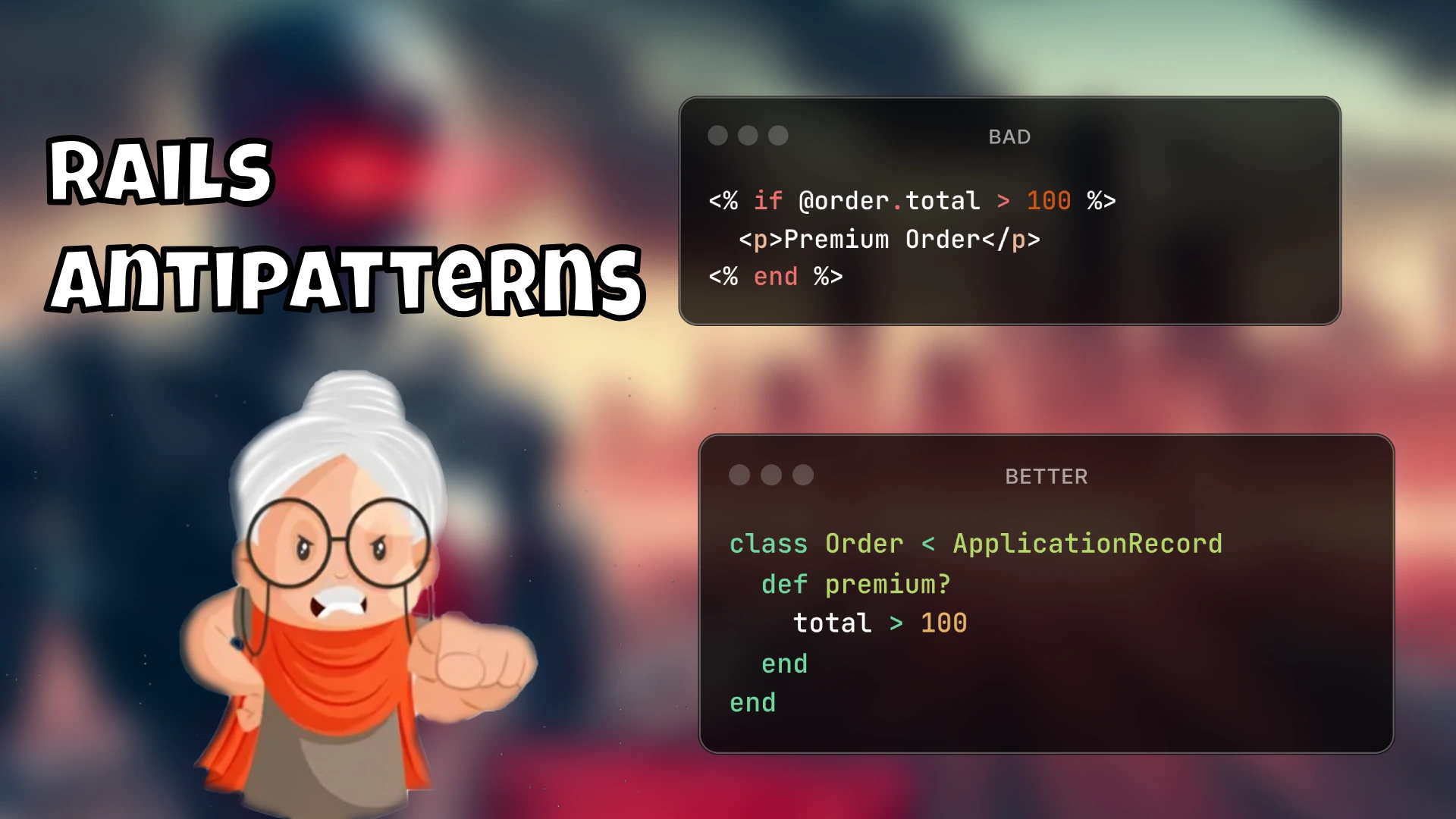
Ruby on Rails Anti-pattern code example

Rails Antipatterns Models

Rails AntiPatterns in Models – and How to Fix Them Rails encourages clean separation of concerns, but it’s easy to let logic leak into the wrong layer. The model is meant to encapsulate business rules and domain behavior, yet many applications end up with fat controllers, bloated views, or overly complex models. Below are common anti-patterns in Rails models and their solutions, with code. 1. View Logic Belongs in the Model A common mistake is putting conditional business logic directly in views. ...


August 19, 2025 · Arnošt Havelka
two people using Ruby on Rails and React

How to Handle CSRF Authentication in Rails and React

Prerequisites This tutorial follows my previous post on handling Rails API authentication with React frontend. You can follow along without it, but I assume: You’re using Ruby on Rails with a React frontend You’ve implemented cookie‑based authentication How it works After login, the browser stores a secure cookie that’s automatically appended to every client request. An attacker’s site can forge requests on the user’s behalf, and they’ll be authenticated. Attack vector: Another site issues requests to your site while pretending to be the user. ...

July 15, 2025 · Arnošt Havelka
React and Ruby on Rails 8 logos

Rails 8 API Authentication with Cookies and React Frontend

Overview In this tutorial, you’ll learn how to implement cookie-based authentication with Rails 8. Rails offers many authentication methods—even DIY ones—but cookies are secure, easy to use, and handled automatically by browsers. While many tutorials use JWT, it has a major drawback: where do you store it? Local storage is insecure and easily exploited. Though you can secure JWTs with extra effort, it’s still a relatively new technology. If your primary API consumer is the browser, cookie-based authentication is safer and simpler. ...

June 30, 2025 · Arnošt Havelka